
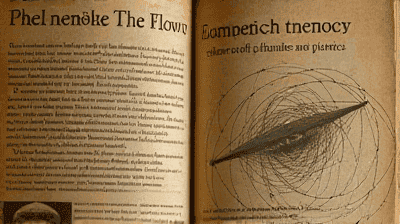
When we think of pivotal moments in the history of science, few can rival the impact of Isaac Newton's "Philosophiæ Naturalis Principia Mathematica," commonly known as the Principia. Published in 1687, this groundbreaking work laid the foundations for classical mechanics and forever altered humanity's understanding of the natural world.
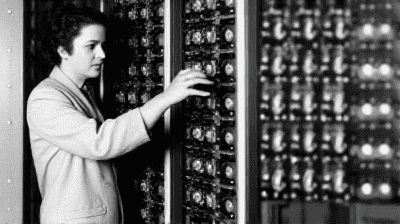
In the annals of computer history, the story often revolves around groundbreaking innovations, visionary engineers, and the machines that changed the world. However, a significant chapter remains largely untold: the critical contributions of women who played vital roles in the development of early computing systems, particularly the Electronic Numerical Integrator and Computer (ENIAC).

The transformation of alchemy into modern chemistry is one of the most fascinating stories in the history of science. Alchemy, often romanticized as the quest to turn base metals into gold and discover the elixir of life, is frequently dismissed as a pseudoscience.
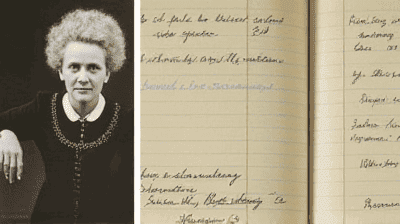
Marie Curie is often celebrated as one of the most notable scientific pioneers of the 20th century. Best known for her groundbreaking research on radioactivity—a term she coined—Curie's work laid the foundation for advancements that would transform medicine, energy production, and our understanding of atomic science.

The universe is vast, containing billions of galaxies, each with millions or even billions of stars, many of which are likely to have planets capable of supporting life. Given these staggering numbers, the question that emerges is: Where is everybody?